Rasmussen: 81% of Americans are Paying More for Groceries

What?!  Someone get the Bernanke on the line ASAP!  Apparently the remaining 19% of Americans work at TBTF banks and the Federal Reserve.  From Rasmussen:

Most adults continue to say they are paying more for groceries than they were a year ago, and they expect that amount to be even higher next year.

A new Rasmussen Reports national telephone survey finds that 81% of American Adults are paying more for groceries than they were a year ago, down from 86% in March but generally in line with previous findings. Just 12% say their grocery bills are no higher than they were last year. 

It’s interesting that even after adjusting for fake tuna and horse meat, prices are still climbing.  These Americans are clearly conspiracy theorists (if you want to know whether you are one or not click here), everyone knows there is no inflation and that Oceania has always been at war with Eastasia.

Full story here.

In Liberty,
Mike

Follow me on Twitter!

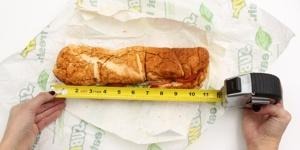
The Latest Victim of Inflation: Subway’s “Footlong” Sub

In what has now become a series of posts on how people in the western world are being shortchanged by stealth inflation, we now find out that: “four out of seven Footlongs — purchased at Subway locations in Manhattan, Brooklyn and Queens — measured only 11 or 11.5 inches.”

Subway

Not to worry.  The stock market is near all time highs and the politburo’s statistics agencies continue to ensure us that there is no inflation.  From the New York Post:

Stingy Subway sandwich honchos are shorting customers by serving 11-inch “Footlong” subs, hungry New Yorkers say.

Four out of seven Footlongs — purchased at Subway locations in Manhattan, Brooklyn and Queens — measured only 11 or 11.5 inches, according to the test.

And that’s not the only corner Subway is cutting — the shops have sliced their cold-cut sizes by 25 percent in the past few months, a Manhattan franchise owner told The Post.

Continue reading

R.I.P. Retirement: 28% of Americans are Raiding Their 401k Plans

This trend has been in place since the financial crisis, but the fact that it is accelerating is extremely disconcerting.  First off, this is not the kind of behavior that should be witnessed in an “economic recovery.”  Second, we need to remember the huge percentage of Americans on food stamps and/or disability.  As I have discussed previously, many of them also have jobs.  So essentially, a wage and a check from the government is still not enough to survive.  They still need to tap into a loan from their 401k plans.

From the Washington Post:

More than one in four American workers with 401(k) and other retirement savings accounts use them to pay current expenses, new data show. The withdrawals, cash-outs and loans drain nearly a quarter of the $293 billion that workers and employers deposit into the accounts each year, undermining already shaky retirement security for millions of Americans.

A report due out this week from the financial advisory firm HelloWallet found that more than one in four workers dip into retirement funds to pay their mortgages, credit card debt or other bills. Those in their 40s have been the most likely culprits — one-third are turning to such accounts for relief.

Continue reading

Inflation Rocks the UK as Beer Gets Watered Down

These types of stories are popping up with increased frequency throughout the western world.  Products are simply declining in quality, and in many cases these declines are being accompanied by price increases.  Remember my article from a week ago Inflation Hits Coffee as Brewers Secretly Swap Robusta for Arabica.  This is more or less the same story, except this time in the UK and centered around beer.  From CNBC:

Britain’s favorite pint of bitter is being watered down as austerity continues to bite and taxes rise.

John Smith’s Extra Smooth, billed as “no nonsense beer”, is being reduced from 3.8 percent alcohol to 3.6 percent in response to rising costs and reduced beer consumption.

Heineken, which is also raising the cost of the famous bitter by about 2.5 pence a pint, said it was bringing John Smith’s “in line with competitor smooth ales that already sit at or below this alcoholic strength”, including its biggest rival, Carlsberg’s Tetley Smoothflow.

Now here is my favorite line:

Continue reading

Inflation Hits Coffee as Brewers Secretly Swap Robusta for Arabica

This article hit close to home for me.  Literally.  It was just over the holiday season that I mentioned to my mom that her coffee doesn’t taste as good as it used to.  She insisted that she was buying the same blend as always and I insisted it didn’t taste as good.  The conversation ended there.

Then I came across the following article and everything started to make sense.  From the Daily Finance:

Reuters is reporting that many of America’s major brands have been quietly tweaking their coffee blends. While most coffee companies consider their blends trade secrets, and are loath to disclose exactly what goes into them, both circumstantial and direct evidence suggests they’re now substituting lower-grade Robusta beans for some of their pricier Arabica, and degrading the quality of our coffee.

Research out of agricultural bank Rabobank confirms that demand for Arabica beans among coffee buyers “has fallen 27% year-to-date, while Robusta [demand] is 25% higher.” This seems to confirm a widespread alteration of the bean mix.

Why the switcheroo? Prepare to not be shocked. The answer is: price.

Now here’s the kicker of the article.

Continue reading

Obama Wins 8 of the Nation’s 10 Wealthiest Counties…Impressive Stats for a “Socialist”

I just love these statistics posted by CNBC yesterday:

In an election that often focused on debates about class warfare, President Barack Obama was favored over multimillionaire businessman Mitt Romney in eight of the nation’s 10 wealthiest counties.

For a guy that supposedly wants to redistribute wealth, the wealthiest people sure do seem to like him.  The sad truth of the matter is that Obama is doing one simple thing.  He is paying off the poor via food stamps and disability checks so that they stay in line while the oligarchs steal everything in sight.  The middle class is squeezed in the process and is rapidly disappearing.  So in a way he is a wealth distributor, just not in the way the pundits would have you believe.  He is funneling the wealth or the middle class and non-oligarch rich to the super rich oligarchs.  The poor just get paid off to shut-up as usual.  I am once again reminded of Keynes’ famous quote:

Lenin is said to have declared that the best way to destroy the capitalist system was to debauch the currency. By a continuing process of inflation, governments can confiscate, secretly and unobserved, an important part of the wealth of their citizens. By this method they not only confiscate, but they confiscate arbitrarily; and, while the process impoverishes many, it actually enriches some. The sight of this arbitrary rearrangement of riches strikes not only at security but at confidence in the equity of the existing distribution of wealth.

So there we have it.  Obama the socialist? No. Obama the crony capitalist coddler?  Most definitely.

Read the CNBC article here.

In Liberty,
Mike

The Most Important Chart in the World

Fill your bowl to the brim and it will spill.  Keep sharpening your knife and it will blunt.  Chase after money and security and your heart will never unclench.  Care about people’s approval and you will be their prisoner.  Do your work, then step back.  The only path to serenity.
- Tao Te Ching

It is not the consciousness of men that determines their being, but, on the contrary, their social being that determines their consciousness.
-  Karl Marx

Keep away from people who try to belittle your ambitions. Small people always do that, the really great make you feel great too
-  Mark Twain

The Most Important Chart in the World
Back in my Bernstein days, I never really took a large amount of presentation materials to most of my meetings.  However, there was one chart that I always printed out and brought with me and I called it “The Most Important Chart in the World.”  It still is.  The chart I am referring to is the ratio of the Dow Jones Industrial Average: The Gold Price.  In a nutshell, charting this ratio demonstrates the “real” return on stocks adjusted for inflation or currency debasement.  As we all know, the Zimbabwe stock market essentially went up to infinity during their hyperinflation but did anyone get rich from that?  Of course not, the shares were denominated in a currency that was on its way to worthlessness.  At the moment, with many U.S. stock indices hitting new post-2008 highs there seems to be a general view that stocks as an asset class will do well in an inflationary environment.  As a result, whenever there is actually QE or even the mention of the potential resumption of Fed balance sheet expansion there is a rally in equity prices.  In fact, I think the entire investor class in the U.S. has been lulled into a sense of sleep and complacency at the moment.  There are two things I want to point out to people when they are considering whether to increase exposure to equities broadly or not.

1.  Allocation of Portfolios from the BRICS and Europe:  When you look at how well U.S. Treasuries and German Bunds have done this year, it becomes pretty clear that investors have shifted massive amounts of bond capital away from the formerly high growing areas of the world (that are now in serious collapse) into those nations perceived as “safe havens.”  While Germany doesn’t have its own currency, the U.S. obviously does and given concerns surrounding a Euro breakup and the extreme difficulties in the Chinese and Indian economies, many investors have decided the dollar is the best house in a bad neighborhood, at least temporarily.  This has led to a flight to U.S. equities generally, but also specifically into large cap U.S. centric names with dividends.  This is THE crowded trade of 2012 and three prime examples are Wal-Mart (WMT, +22% YTD), Target (TGT, +26% YTD), and Home Depot (HD, +36% YTD).  If you ask me, this trade is extremely long in the tooth.

2.  Strong Performance Concentrated in a Few Stocks:  I have hit on this theme many times before, but the key point is that if you weren’t in the right names this year there is a good chance you have underperformed the market significantly.  While you can say that this is normally the case, this year has been far more extreme as is evidenced by reports of horrible hedge fund performance this year relative to the benchmarks.  Apple (AAPL), of course, is the prime example.  This giant now sports a market cap of $623 billion and is up 65% YTD.

An Inflation Hedge?
The point I am attempting to make above is that those are the two main reasons for U.S. stock outperformance this year.  More than anything else, it has been about reallocation of global portfolios away from former high flying regions into those regions that are deemed safer.  I believe this has been exacerbated by the fact that the relative performance of the U.S. economy versus the BRICs caught a lot of people off guard.  That being said, I also think that the complacency that exists today is partly a function of investors’ belief that stocks will provide a good hedge against rising inflation and so why sell.  After all, if the Bernank is going to print at the first sign of weakness I should be sitting pretty with my stocks.  However, is this a correct train of thought?

My view, and one that was borne out in the last big inflationary period in the 1970s, is that high inflation is not good for stocks.  Not even in nominal terms.  PE ratios shrink as there is little real investment, confidence is shattered and the outlook becomes cloudy.  Some companies have pricing power but many do not.

Here is the chart of the SPX from 1970-1980.

See that.  Nothing done.  That’s ten years of zero, but with some really nice tradable swings.  The reason I bring all this up now is because we are likely to see a significant upswing in inflation as we head into 4Q.  Gasoline prices have been on a tear as of late and are now showing +9% on a year-over-year basis.  Recall that prices at the pump only adjust with a lag, so this will be impacting people for weeks to come.  The bigger issue though will be food.  Largely as a result of the severe drought in the U.S., corn and wheat prices have jumped 50% in the past two months.  This will affect consumption one way or the other.  The reason I am really concerned with the food situation is that the lag on passing on that is even longer, so we really haven’t seen any of it yet.  Furthermore, consumer product and food companies have already utilized almost every trick in the book up until this point.  Shrinking package sizes, putting less in the same packages, etc.  So I envision a scenario coming where the food inflation will be much more overt and in your face and this will further depress psychology.  Particularly amongst the newest members of the food stamp club, who were formally part of the vanishing middle class.

So to me, stocks broadly will not provide the protection assumed by many at the end of the day.  The only way I could see it happening is if we totally destroy the value of the currency (very possible, but I do not see evidence of that trade being in effect yet).  There is one major component missing to the “dollar becoming worthless” event.  One way it could happen would be an outside force dumping dollars (treasuries) aggressively without regard for price.  The second, and more likely scenario, would be a further expansion of the Fed’s balance sheet (QE) but this time directed at the public at large.  The key thing so far has been that the Fed’s actions have really only benefitted speculators as they have borrowed cheaply and purchased assets (hence the rally in markets).  The real inflation will come once the money is handed out at the street level.  This may be coming and if it does, I don’t suspect the names that have benefited so far this year will be the stocks to be in.  Yield chasing will be shunned and inflation protection investing will be en vogue.  I would start to prepare for this eventuality.

Back to The Most Important Chart in the World
Sorry, got a little sidetracked there.  So, the key thing with the Dow/Gold chart is that it perfectly mimics the various social moods and massive secular trends that exist in the economy over very long periods of time.  It is just as effective in periods of deflation as in inflation in telling you the true story.  Let’s take a closer look and examine what it has looked like from 1920-Present.

Monthly Chart of DOW/Gold 1920-Present

What this chart shows you are secular swings in the economy.  You see how stocks ran up in real terms into the 1929 crash and then plunged versus gold.  You see how they ran up in the next great post- WW2 period into 1968 when they once again plunged versus gold.  Then you can see the great secular bull market in stocks from around 1982 to the bubble peak in 2000.  In both of the prior two periods (one deflationary and one inflationary) the DOW/GOLD ratio got down to about 1:1.  It has been my contention for many years that we will see that same ratio once again.  That would imply another roughly 80% drop in stocks to gold and I expect that this next leg is beginning now.

Dow/Gold Two Year Chart
Of course for active investors and traders, timing is important and you can have massive counter trend rallies within a larger, secular trend.  I believe we have just completed one of those.  As you can see in the chart below, the Dow/Gold ratio has just had a massive 44% rally in past year or so, but it looks as if it may have formed a serious top.  Incredibly, it is one of the biggest counter-trend rallies of the entire secular bear period for stocks since 2000, registering at around 44%.  While very painful for those who didn’t see it coming, it is no coincidence that it happened in an election year.  My sense is this chart is currently in reversal mode and I think the ratio could hit between 4-5 from the current 7.8 over the next 12-18 months.  That is a huge opportunity if I am correct.  As always, decide for yourself.

Dow/Gold Two Year Chart    

Back in Colorado
In case you are only on this email list and haven’t seen anything from me in a while, it is because I was traveling and also focusing on my blog: http://libertyblitzkrieg.com/ where I have been posting daily.  If you haven’t signed up to get the blog updates via email, it is very easy to do so on the right sidebar.  Also, I have started using twitter actively and I find it extremely effective.  You can also follow me through twitter on the right sidebar or just find me @libertyblitz

Until next time.

In Peace and Wisdom,

Mike

Thought of the Day – The Incredible Shrinking Size of Sunscreen

As most of you reading this are probably well aware, the insidious tax that is inflation can come in many shapes and sizes.  The two main ways that it is manifested in our everyday lives is via price increases and shrinking portion sizes/lower quality.  I have noticed a lot of both in recent months but it is becoming apparent to me that the shrinking portion strategy has taken off into the stratosphere, at least for me in my everyday life.

It is this latter method of passing on inflation that really drives me up the wall.  While transparent price increases are clearly annoying, at least it is fairly clear to the consumer and he or she understands what has happened and that there may or may not be an economic choice at hand.  In the case of shrinking portion sizes, the price signal is much more subtle if present at all.  You may notice yourself going back to the grocery store more often but that might be all you recognize at first.  It is especially hard to notice in the early phases of inflation when the package size may shrink by 3% and the price increase 2% for example.  It’s only in the intermediate stages of the inflation that you really start to notice you are being screwed.  I believe we have entered that phase.

Continue reading